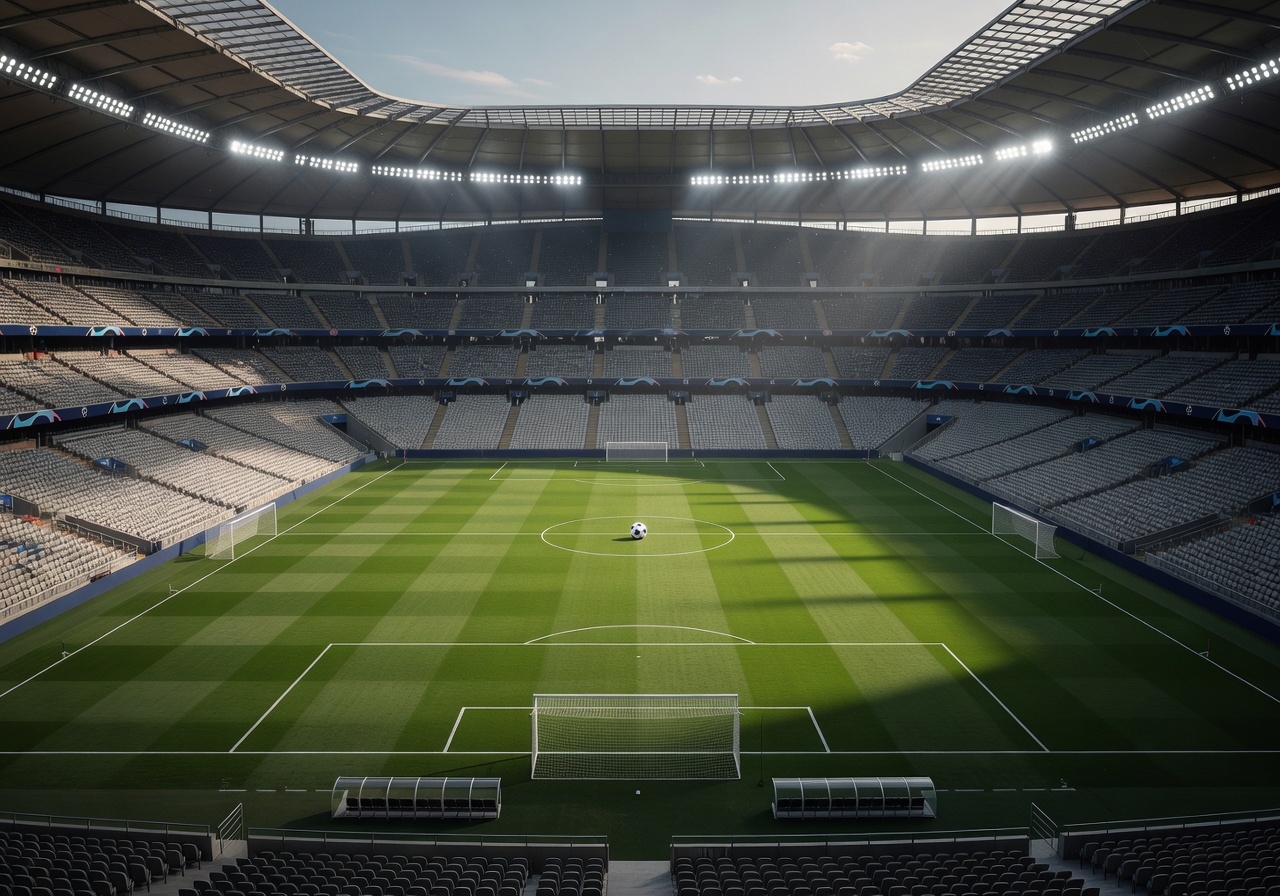
When UEFA awarded the 2026 Champions League Final to Budapest in September 2022, the decision raised questions. The Puskás Aréna, completed only in 2019, lacked the pedigree of Wembley, the Santiago Bernabéu or the Stadio Olimpico. Three years on, that choice looks far more deliberate — and far more modern — than it first appeared.
The Stadium
The Puskás Aréna holds 67,215 spectators. It stands on the site of the old Népstadion, demolished in 2016, and takes its name from Ferenc Puskás, the Hungarian and Real Madrid forward widely regarded as one of the greatest players of all time. The architectural firm responsible — KÖZTI — prioritised three things: a single-tier lower bowl for acoustic intensity, steep upper stands for visibility, and a flexible roof capable of enclosing the playing area without removing natural light.
The result is a venue that consistently ranks among Europe's loudest, despite its relative youth. UEFA's own technical assessment in 2021 rated it in the top five European arenas for crowd-to-pitch proximity.
A Strategic Location
Budapest sits at the geographic centre of Europe. Direct flights connect it to every major UEFA nation within three hours. For a final between a Spanish and an English club, this produces something unusual: a genuinely neutral travel commitment for both sets of supporters.
"The Puskás Aréna represents the next generation of European stadium design — modern, efficient, and built for atmosphere." — Aleksander Čeferin, UEFA President, 2022
Previous Big Nights
The arena has already hosted the 2020 UEFA Super Cup (Bayern Munich vs Sevilla), four matches at Euro 2020 including a round of 16 tie, and the 2023 Europa League Final (Sevilla vs Roma). Each event passed without logistical incident — a record few venues of its age can match.
Budapest as a Host City
Beyond the stadium, the city itself is a strong host. The 2026 fan zone will span Heroes' Square and Városliget Park, with viewing screens along the Danube embankment. Public transport coverage across the metro and tram network is substantial, and the city's compact centre keeps supporters within walking distance of the stadium from most central accommodations.
A Statement of Intent
UEFA's decision to bring the final to Budapest is, quietly, one of the most significant of the modern era. It signals that the competition's biggest night is no longer tied exclusively to its traditional venues. Modern architecture, competent hosting, and central European access now matter. On 30 May, the Puskás Aréna has a chance to prove that case definitively.